
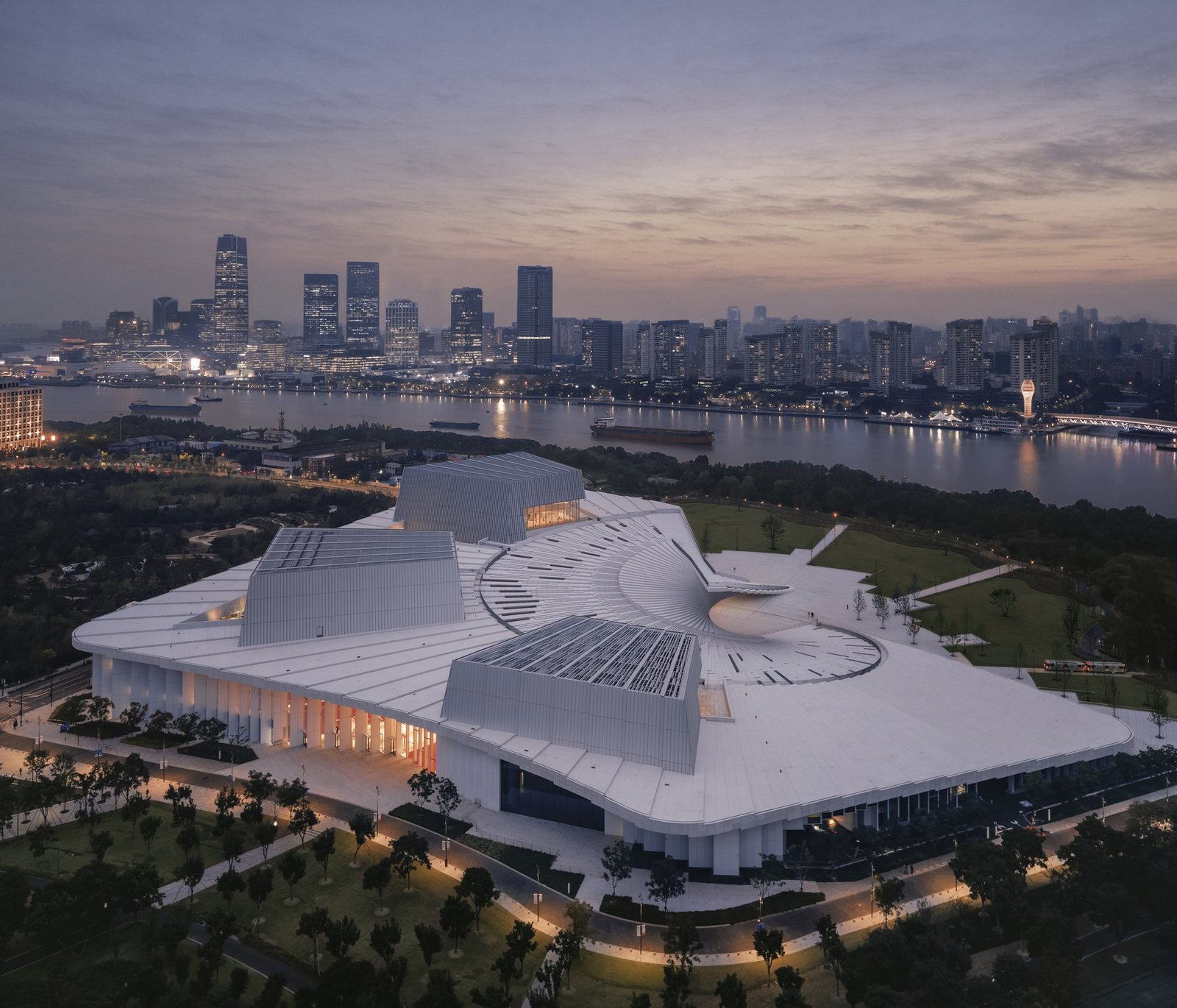
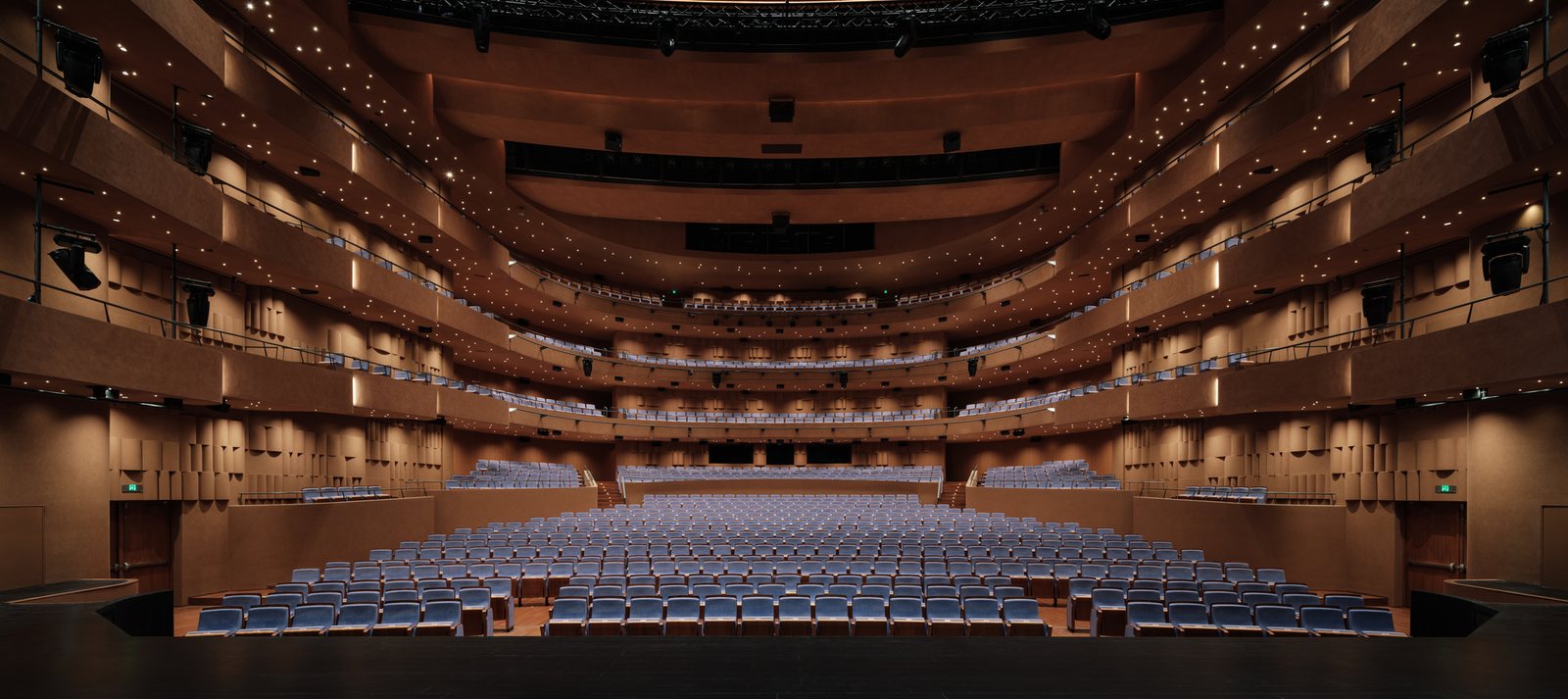
Featuring its distinctive white spiral roof, the Shanghai Grand Opera House has become a new landmark and cultural destination along the banks of the Huangpu River. Opened in October 2026, this major public cultural venue has a gross floor area of approximately 146,000 square metres. It houses three theatres, together with restaurants, galleries, exhibition spaces, arts organisations and other facilities, making it a large, high-traffic performing arts complex. Enclosed performance spaces and dense internal partitions create significant obstacles to wireless signals, resulting in greater signal attenuation than in open outdoor environments or conventional buildings. Behind the venue’s popularity, day-to-day operations, security and maintenance, as well as fire response and emergency rescue, all depend heavily on stable and reliable dedicated communications. The venue therefore needed a professional digital two-way radio private-network coverage system.
The challenge
- Radio traffic congestion during peak periods. When performances end or visitor numbers surge during holidays, audiences and tourists are on site at the same time. Radio traffic from operations, security, customer service and vehicle guidance overlaps. Conventional systems can become overloaded during traffic peaks, triggering a "Channel Busy" indication.
- Coverage gaps between areas. Enclosed theatres, dense partitions and two basement levels of parking combine to weaken radio signals. Concrete and metal structures cause severe attenuation, leaving backstage equipment rooms, elevator lobbies and underground car parks as potential “signal black spots”.
- Inconsistent coverage across different areas. The property-management system operates at 400 MHz, while the fire-service system operates at 350 MHz. Building a separate antenna distribution network for each frequency band would place additional demands on already congested cable trays and risers. Duplicate cabling would also make installation and maintenance more difficult.
- Uninterrupted communications are essential. A single communications failure during a performance could escalate into a safety incident. During emergencies, reliable communications are critical to coordinating firefighting operations, rescue teams and emergency response personnel. The system must therefore withstand both everyday peak traffic and demanding emergency conditions.
The solution
- Managing peak radio traffic. A digital trunking system with a three-carrier base station was deployed. Dynamic channel allocation allows multiple departments to make concurrent calls without queuing or blocking, ensuring that operational instructions are delivered promptly even during traffic surges.
- Eliminating indoor coverage gaps. Indoor antennas were installed at high density, with an approximate coverage radius of 25 metres, in elevator lobbies, corridors, equipment rooms and the underground car park. Outdoor coverage uses a lower-density arrangement at elevated points. The equipment is rated IP65, providing continuous, gap-free signal coverage from the roof to the car park.
- Optimizing limited riser space. Through a cross-band combiner, the 350 MHz fire-service system and the 400 MHz property-management system share a common broadband antenna distribution network, allowing transmission and reception signals from both systems to be carried over the same cable infrastructure.The two networks therefore “share one path”, avoiding duplicate cabling and conserving riser space.
- Ensuring service continuity. A combination of remote radio-over-fibre and RF transmission provides independent coverage by sector. A signal fault in one sector does not affect other areas, helping keep performance operations and emergency communications running.
- Enabling real-time system monitoring and maintenance. A dedicated monitoring server provides 24/7 remote monitoring and fault alerts, and supports remote system commissioning and adjustment.
Results
- Comprehensive site-wide coverage. The system provides comprehensive, blind-spot-free coverage and meets emergency communications requirements, delivering stable communications for operations, security and fire response.
- Reduced infrastructure investment. Cross-band sharing between the property-management and fire-service systems, using a common antenna distribution network, saves riser space and reduces investment.
- Improved fault isolation and system resilience. Fibre-based zoning ensures that a single-point failure does not affect other sectors, helping prevent interruptions to performances.
- Regulatory compliance and readiness. The system uses compliant frequencies and is integrated in accordance with applicable specifications, supporting inspection, acceptance and handover.
- Improved maintenance efficiency. · Remote monitoring and maintenance capabilities reduce the need for on-site manual intervention, improving operational efficiency and reducing maintenance efforts.
Used on this project
Our engineers can review your site plans and propose a coverage design and frequency plan.
Talk to an engineer